
439 California Workers Died in 2023—Here's What Liquor Store Owners Must Know About Workers' Comp
Gillkor Insurance Team
The Deadly Reality Behind California's 439 Workplace Deaths
California recorded 439 workplace deaths in 2023—a sobering statistic that reveals an important truth for liquor store owners: your employees face dangers that extend far beyond typical retail risks. Beyond these fatalities, private industry employers reported 363,900 nonfatal workplace injuries and illnesses in California during 2023. For liquor stores, this creates a perfect storm of specialized hazards that can devastate small businesses with financial catastrophe.
Liquor store employees confront threats that most retailers never encounter. Armed robberies target cash-heavy businesses, creating life-threatening situations daily. Late-night shifts expose workers to intoxicated customers and criminal activity. Moving heavy inventory leads to back injuries and falls, while broken glass creates laceration risks. Unlike clothing stores or electronics retailers, liquor stores combine high-crime targets with demanding physical requirements, multiplying injury risks exponentially.
The financial impact hits small business owners hardest. A single workplace injury can trigger medical costs, lost wages, and legal expenses that cripple cash flow. Workers' compensation premiums increase based on claims history, creating long-term financial penalties. Many liquor store owners discover coverage gaps only after incidents occur, facing unexpected costs that threaten business survival.
Critical Reality Check: Workers' compensation insurance for beer, wine, and liquor stores costs an average of $76 per month, or $905 per year. However, this basic premium can skyrocket after claims, with serious workplace injuries potentially doubling or tripling these costs for years.
Liquor stores operate within California's complex regulatory environment, where all employers must provide workers' compensation benefits under California Labor Code Section 3700. The state's strict enforcement means non-compliance isn't just risky—it's illegal. Understanding your specific obligations and coverage needs becomes essential for protecting both employees and business assets.
These statistics demonstrate why proactive workers' compensation planning matters more for liquor store owners than reactive crisis management.
California Workers' Comp Laws Every Liquor Store Owner Must Follow
California's workers' compensation regulations make no exceptions for small businesses or seasonal employees. Under California Labor Code Section 3700, all California employers must provide workers' compensation benefits to their employees, creating a mandatory legal obligation that applies from the moment you hire your first worker.
Mandatory Coverage Requirements
Your workers' compensation obligations begin immediately upon employing staff. California requires all businesses with employees to carry workers' compensation insurance, including both full-time and part-time workers. This eliminates the common misconception that part-time cashiers or temporary holiday help fall outside coverage requirements.
Liquor store owners must meet these specific compliance requirements:
• Coverage for all employees from their first day of employment • Prompt reporting of workplace injuries to your insurance carrier • Maintaining current certificates of insurance • Posting workers' compensation notices in employee areas • Annual payroll reporting for premium calculations
Employee classification presents significant compliance risks. Many liquor store owners incorrectly classify delivery drivers or stock clerks as independent contractors to reduce costs, exposing themselves to penalties and coverage gaps. California applies stringent tests for contractor classification, and most retail positions fail to meet these criteria.
Penalties and Enforcement
Operating without workers' compensation coverage triggers severe consequences. California's Division of Workers' Compensation conducts unannounced inspections of retail businesses, particularly targeting those with liquor licenses due to heightened regulatory oversight. Violations result in immediate stop-work orders, criminal misdemeanor charges, and civil penalties that can exceed annual premium costs.
Record-keeping requirements extend beyond basic payroll documentation. You must maintain injury logs, safety training records, and documentation proving coverage dates. During inspections, investigators verify employee classifications, review injury reports, and examine your certificate of insurance.
"The cost of compliance is always less than the cost of violations," notes a California workers' compensation attorney specializing in retail businesses.
With workers' compensation insurance for beer, wine, and liquor stores averaging $76 per month, or $905 per year, compliance remains affordable compared to potential penalties.
Understanding these requirements helps you avoid costly mistakes while protecting your employees and business operations.
Class Code 8060 Breakdown: What Liquor Stores Actually Pay
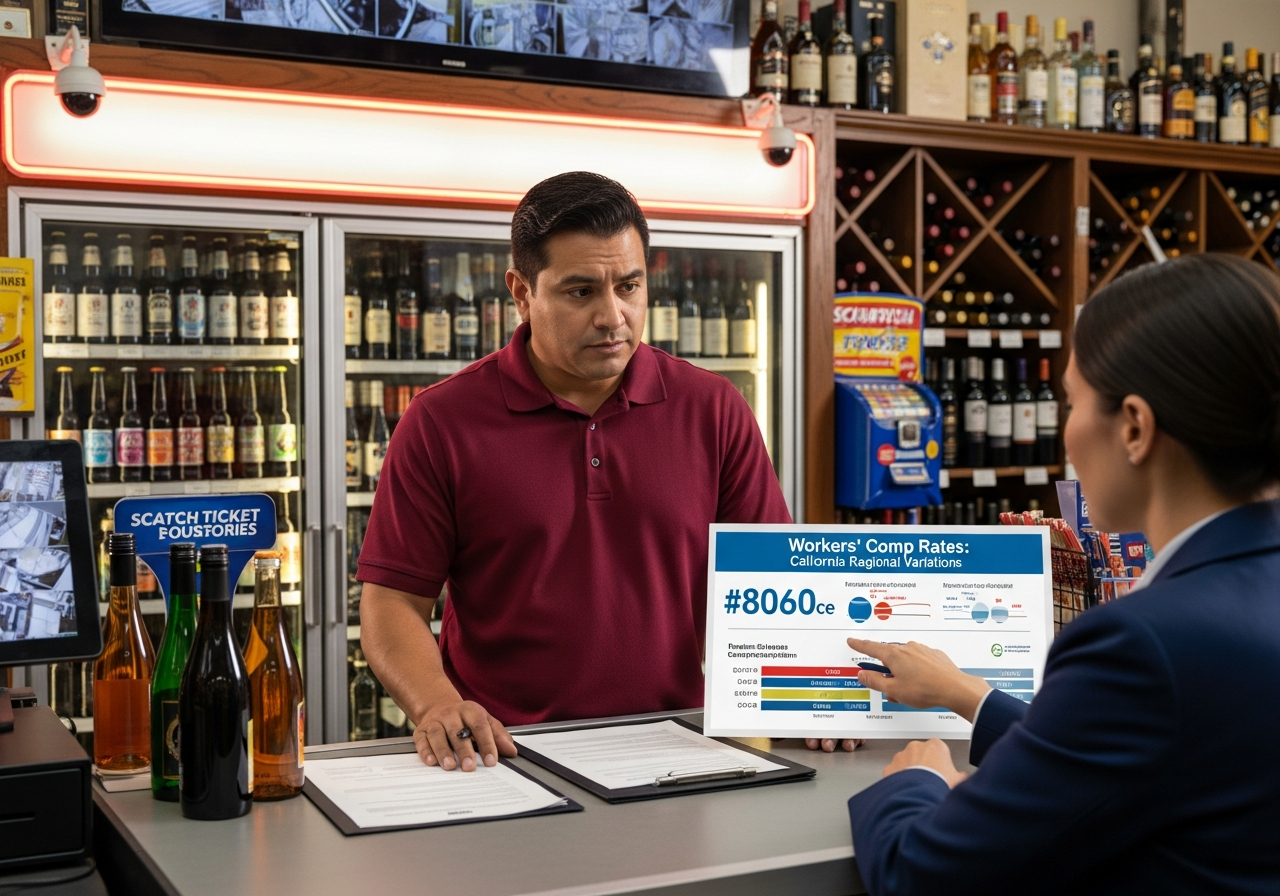
Liquor stores fall under Class Code 8060 for workers' compensation insurance, a classification reflecting the unique risk profile of retail businesses selling alcoholic beverages. This classification considers factors including inventory handling, cash transactions, customer interactions, and potential theft-related incidents that distinguish liquor stores from general retail operations.
Workers' compensation insurance for beer, wine, and liquor stores costs an average of $76 per month, or $905 per year, making it one of the more affordable commercial insurance requirements for California retailers. However, your actual premium depends on several critical factors that can substantially alter your final costs.
Key factors affecting your Class Code 8060 premium:
• Annual payroll amount and number of employees • Location within California (urban vs. rural pricing variations) • Claims history and experience modification rate • Safety programs and risk management practices • Policy deductible selection • Insurance carrier and coverage options
California's regional pricing variations can create substantial cost differences. Los Angeles and San Francisco Bay Area liquor stores typically face higher premiums than rural Central Valley locations due to elevated medical costs, wage levels, and claim frequency patterns.
Your experience modification rate (EMR) serves as the ultimate cost multiplier. A clean safety record with no claims can reduce your premium below the base rate, while multiple claims or severe incidents can double or triple your costs. New businesses start with a 1.0 EMR, which adjusts annually based on your three-year claims experience.
> Cost-Saving Alert: Implementing documented safety training programs and maintaining detailed incident logs can qualify you for additional premium discounts beyond your EMR improvements.
Understanding these cost drivers helps you budget effectively while identifying opportunities to reduce workers' compensation expenses through proactive risk management.
The Coverage Gap That Could Destroy Your Liquor Store Business
A single workplace injury can financially devastate liquor store owners who assume their basic commercial insurance provides adequate protection. Most liquor store insurance policies exclude employee-related claims such as workers' compensation, leaving business owners exposed to catastrophic liability reaching hundreds of thousands of dollars.
The most dangerous coverage gap involves employer liability protection. While California mandates workers' compensation coverage, standard policies often exclude employer liability claims when employees sue for damages beyond basic workers' comp benefits. This gap becomes critical when workplace injuries involve third-party negligence, unsafe working conditions, or allegations of deliberate employer misconduct.
Independent contractor misclassification creates another devastating exposure. Many liquor store owners classify delivery drivers or part-time stockers as contractors to reduce costs, but California's strict ABC test often reclassifies these workers as employees. When misclassified workers suffer injuries, owners face both workers' compensation penalties and personal liability for medical expenses.
Critical Alert: After-hours incidents during inventory deliveries, cleaning, or security checks frequently fall outside standard coverage periods, leaving owners personally liable for employee injuries.
Delivery operations present particularly complex coverage challenges. Employees transporting products between locations or making customer deliveries may lack coverage under standard premises-based policies. Vehicle accidents during work-related travel can trigger simultaneous auto liability and workers' compensation claims.
Workers' compensation insurance for beer, wine, and liquor stores costs an average of $76 per month, or $905 per year—a fraction of potential lawsuit settlements. Smart owners invest in comprehensive coverage including employer liability protection, proper contractor classification guidance, and 24/7 incident coverage.
Understanding these gaps prevents the financial disasters that force liquor store closures after workplace incidents.
Your 72-Hour Action Plan When Workplace Injuries Occur
When an employee suffers injury, your response within the first 72 hours determines whether you face a manageable claim or a business-threatening lawsuit. With 363,900 nonfatal workplace injuries occurring across California in 2023, proper injury response protocols protect both your employee's wellbeing and your business's financial stability.
Hour 1: Immediate Response Checklist
- Secure the scene and provide immediate medical attention
- Document the incident with photos, witness statements, and detailed notes
- Contact emergency services if serious injury occurred
- Notify your workers' compensation insurance carrier immediately
- Preserve any evidence related to the incident
Hours 1-24: Critical Notifications and Documentation California law requires specific notifications within 24 hours. Contact your insurance carrier's claims hotline, complete the employer's report of injury (Form 5020), and provide the injured employee with a claim form (DWC-1). Document everything: time, location, witnesses, and circumstances surrounding the injury.
Hours 24-72: Managing the Claims Process Work directly with your assigned claims adjuster to coordinate medical care through approved provider networks. Schedule follow-up communications with the injured employee to demonstrate concern and maintain positive relationships. Review security footage if available and gather additional witness statements while memories remain fresh.
> Fraud Protection Alert: Watch for red flags including injuries reported on Mondays, claims filed shortly before termination, or incidents with no witnesses. Document inconsistencies without making accusations.
Communication Strategy Example When speaking with injured employees, focus on their recovery: "We want to ensure you receive the best medical care possible. Our insurance carrier will coordinate your treatment, and we'll stay in touch throughout your recovery process."
Proper 72-hour response protocols transform potential disasters into manageable claims, protecting your $76 monthly workers' compensation investment while ensuring injured employees receive appropriate care.
Proven Strategies That Cut Workers' Comp Costs by 30%
Smart liquor store owners reduce workers' compensation costs by implementing targeted safety programs addressing their unique operational risks. With workers' compensation injuries averaging $90,043 per claim, preventing even one incident delivers substantial savings that far exceed comprehensive safety measure costs.
Effective return-to-work programs specifically designed for liquor store environments help employees transition back to modified duties while recovering from injuries. These programs focus on tasks like inventory organization, vendor scheduling, or administrative duties that accommodate physical limitations while maintaining productivity. Early return-to-work initiatives reduce claim duration and associated costs while demonstrating genuine concern for employee welfare.
Vendor management strategies provide another critical cost-reduction opportunity. Many liquor store injuries involve delivery personnel, maintenance workers, or cleaning crews who aren't direct employees. Requiring proof of workers' compensation coverage from all vendors and implementing clear safety protocols for deliveries, equipment repairs, and facility maintenance transfers liability appropriately while maintaining operational standards.
Technology solutions offer powerful injury prevention capabilities through: • Surveillance systems that identify unsafe behaviors and near-miss incidents • Automated inventory tracking that reduces manual lifting and repetitive strain • Point-of-sale systems with ergonomic designs that prevent cashier injuries • Environmental monitoring for slip hazards and lighting conditions • Digital training platforms that ensure consistent safety education
Specialized training programs address liquor store-specific risks including robbery response, chemical exposure from cleaning products, proper lifting techniques for heavy cases, and de-escalation strategies for intoxicated customers. Regular safety meetings focusing on seasonal hazards, new product handling, and emergency procedures create a prevention culture that reduces both injury frequency and severity.
With workers' compensation insurance costing liquor stores an average of $76 per month, these prevention strategies typically reduce premiums by 20-30% within the first policy year while creating safer working environments that protect your most valuable assets—your employees.
Your Next Steps to Secure Proper Workers' Comp Coverage
Don't wait until an injury forces your hand. Proactive coverage evaluation protects your business and employees from devastating financial exposure. Under California law, employees have 30 days from injury to notify employers and one year to file formal workers' compensation claims, making comprehensive coverage essential from day one.
Critical Questions for Your Current Coverage Review:
• Does your policy specifically address Class Code 8060 risks for wine, beer, and spirits retail operations? • Are your premium calculations based on accurate payroll reporting and current employee classifications? • Does your coverage include adequate medical benefits and wage replacement provisions? • Have you disclosed all aspects of your operations, including late-night hours and cash handling? • Are independent contractors properly classified to avoid coverage gaps?
> "Many liquor store owners discover their coverage inadequacies only after filing their first major claim—by then, it's too late to avoid financial disaster."
Red Flags Demanding Immediate Action:
Premiums substantially below the $76 monthly average often indicate insufficient coverage or misclassified operations. Policies excluding specific retail risks, unclear injury reporting procedures, or carriers unfamiliar with liquor store hazards signal dangerous coverage gaps.
Work exclusively with agents experienced in retail alcohol sales who understand your unique liability exposures. Schedule quarterly coverage reviews to address operational changes, employee additions, or expanding business hours.
Implement safety improvements immediately and secure proper coverage—waiting increases both injury likelihood and premium costs. Establish relationships with experienced workers' compensation attorneys and occupational health providers before incidents occur.
Taking these proactive steps transforms workers' compensation from a costly burden into a competitive business advantage that protects your employees and secures your business's future.
About Gillkor Insurance Team
Expert commercial insurance guidance from the Gillkor Insurance team. Specializing in California business insurance solutions.
Stay Informed About Insurance Updates
Get the latest insurance insights and tips delivered to your inbox
Subscribe to Updates