
California Delivery Fleets: Why Your 2025 Insurance Costs Just Jumped 30% (And What You Must Do Now)
Gillkor Insurance Team
The Perfect Storm Hitting California Delivery Fleets in 2025
Three major changes are creating unprecedented pressure on California delivery fleets this year. According to California's 2025 Commercial Auto Liability Insurance Update, California increased minimum commercial auto liability limits effective January 1, 2025, forcing all businesses to upgrade their policies immediately. The new rules establish minimums at $30,000 for bodily injury per person and $60,000 per accident, according to Business Auto Liability: Key Changes and What They Mean for Your Business in 2025. Property damage coverage also increased to $15,000 per accident.
Simultaneously, commercial auto insurance costs jumped 9-9.8% in just the first half of 2024, with this trend accelerating in 2025. The insurance industry's $5 billion loss is driving carriers to implement even steeper rate increases.
Delivery businesses face unique risks that standard personal auto insurance doesn't address:
• Higher accident frequency due to constant stop-and-go driving patterns • Elevated theft risk from visible cargo and predictable routes • Dangerous coverage gaps when using personal policies for commercial operations • Increased liability exposure from frequent customer interactions
The new regulations compound existing market challenges:
• Stricter enforcement of commercial coverage requirements • Substantial penalties for operating without proper insurance • Enhanced reporting requirements for fleet operators • Expanded liability definitions affecting gig economy drivers
These challenges represent more than temporary market fluctuations—they signal a fundamental shift in how California regulates and prices delivery fleet insurance.
What California's New Commercial Auto Requirements Mean for Your Fleet
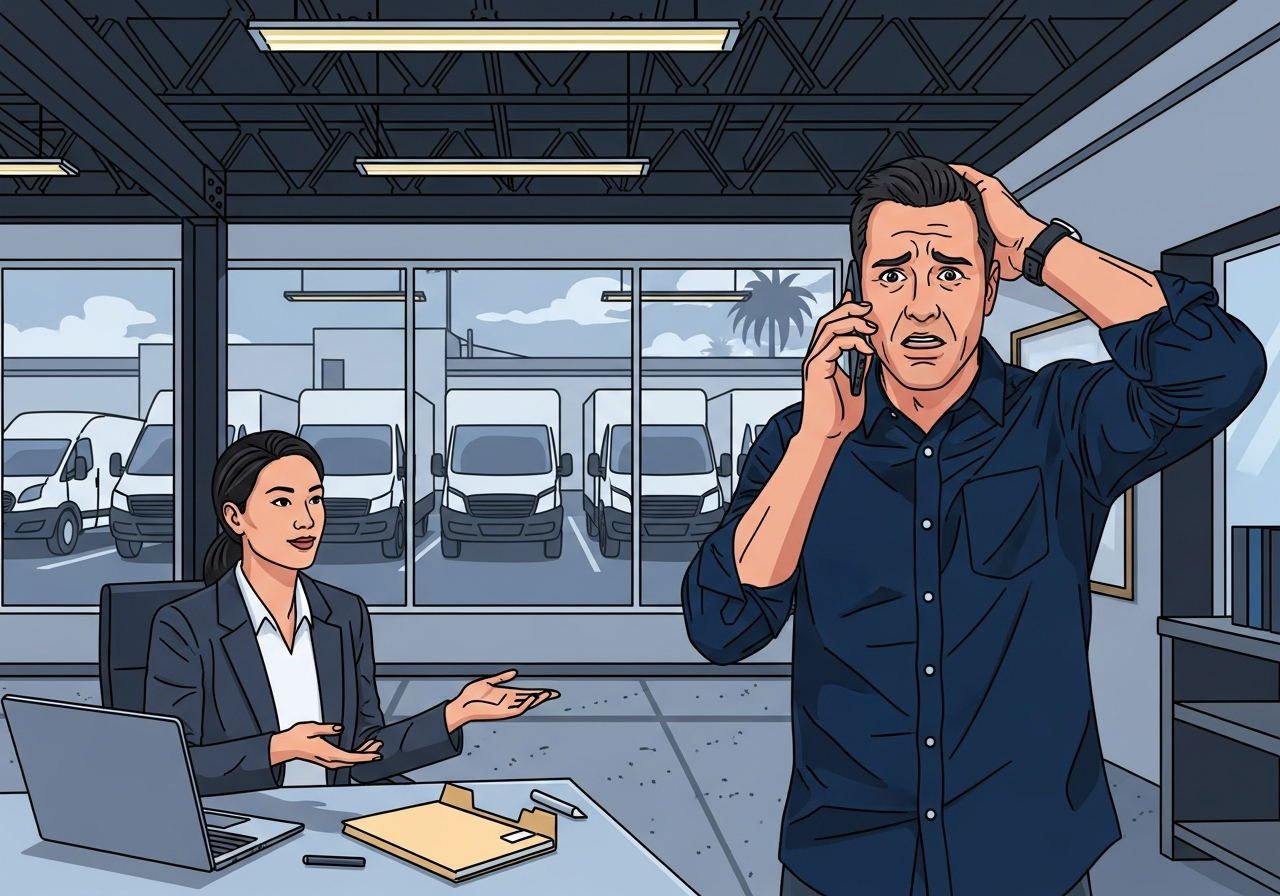
California's updated regulations create immediate compliance obligations for delivery fleet operators. The state now mandates higher minimum liability coverage for all commercial vehicle operations, fundamentally changing how delivery businesses structure their insurance programs.
New Minimum Liability Requirements:
- Bodily injury coverage: $30,000 per person injured in an accident
- Total bodily injury coverage: $60,000 per accident regardless of the number of people injured
- Property damage coverage: $15,000 per accident for vehicle and property repairs
What Qualifies as Commercial Vehicle Use:
- Vehicles used for delivery operations during business hours
- Any vehicle transporting goods for compensation
- Fleet vehicles registered under business names or federal tax IDs
- Vehicles exceeding 10,001 pounds gross weight
Critical Deadlines and Penalties:
- Claims must be filed within nine months of the incident
- Coverage gaps trigger immediate license suspension for commercial operators
- Fines range from $750 to $2,500 for operating without proper minimum coverage
- Repeat violations mandate comprehensive fleet safety audits
These requirements apply immediately to both existing policies and new coverage purchases. Fleet managers operating under previous minimum limits will experience automatic policy adjustments and corresponding cost increases. The nine-month claims deadline particularly impacts delivery operations, where minor incidents often go unreported until routine damage inspections reveal more significant problems.
Understanding these fundamental requirements provides the foundation for addressing how rising insurance costs will impact your operational budget.
The Hidden Costs of Inadequate Delivery Fleet Coverage
Delivery businesses relying on personal auto policies face catastrophic financial exposure that far exceeds any premium savings. Personal auto insurance carriers explicitly exclude commercial delivery activities, leaving drivers and fleet owners personally liable for accidents occurring during business operations.
The true cost of coverage gaps becomes evident through these stark realities:
• Personal auto policies provide zero coverage for commercial delivery activities • Average commercial auto claims range from $15,000 to $150,000 per incident • Property damage alone can exceed personal policy limits within minutes • Legal defense costs accumulate rapidly, often reaching five-figure amounts • Business interruption losses compound during extended claim disputes
Consider a delivery driver causing a multi-vehicle accident during peak hours. Their personal auto policy will deny coverage due to commercial use exclusions, leaving the driver personally responsible for vehicle repairs, medical expenses, and potential lawsuit damages. Meanwhile, the delivery business faces workers' compensation claims, potential regulatory violations, and contractual disputes with delivery platforms.
California's expanding delivery market amplifies these risks. With California's increased minimum commercial auto liability limits effective January 1, 2025, regulations demand comprehensive coverage strategies. The state's new minimums of $30,000 for bodily injury per person and $60,000 per accident, plus $15,000 for property damage coverage, represent baseline protection that serious delivery operations must exceed.
Market data reveals that coverage gaps create cascading financial consequences:
• Uninsured accident costs average 300-500% higher than annual commercial premiums • Legal settlements frequently exceed minimum liability limits • Business closure rates spike following major uninsured incidents • Recovery timelines extend 18-24 months without proper coverage
These hidden costs transform seemingly affordable coverage gaps into business-threatening liabilities requiring immediate attention.
Proven Coverage Strategies for Managing Rising Premium Costs
Escalating commercial auto insurance costs demand strategic approaches that balance comprehensive protection with cost management. With commercial auto premiums increasing between 9% and 9.8% in the first two quarters of 2024, cost-effective coverage strategies become essential for maintaining profitability.
Fleet safety programs deliver measurable premium reductions through demonstrated risk mitigation:
• Driver training programs reduce accident frequency by establishing consistent safety protocols • Preventive maintenance schedules eliminate mechanical failures that trigger claims • Regular safety meetings create accountability and reinforce defensive driving practices • Comprehensive background checks and driving record reviews ensure qualified operators
Deductible strategies vary based on fleet size and risk tolerance:
• Small fleets (1-5 vehicles) benefit from moderate deductibles balancing premium savings with manageable out-of-pocket exposure • Medium fleets (6-25 vehicles) can absorb higher deductibles while achieving significant premium reductions • Large fleets (25+ vehicles) often implement high-deductible programs effectively self-insuring smaller claims
Technology solutions transform risk profiles and unlock carrier discounts:
• Telematics systems monitor driver behavior and provide real-time coaching • Dash cameras defend against fraudulent claims and provide accident documentation • GPS tracking enables rapid emergency response and theft recovery • Fleet management software optimizes routes and reduces exposure time
Bundling commercial policies creates substantial savings opportunities. Combining commercial auto with general liability, workers' compensation, and property coverage typically yields 15-25% discounts while simplifying policy administration.
Specialized delivery fleet insurers understand unique operational risks and offer tailored coverage solutions. These specialists provide competitive pricing because they accurately assess delivery-specific exposures rather than applying generic commercial auto rates.
Since California requires commercial auto insurance for delivery drivers, proper coverage selection becomes critical for regulatory compliance and adequate protection. Working with experienced agents who understand delivery fleet operations ensures appropriate coverage while maximizing available discounts.
Implementing these strategies requires immediate action as carriers continue adjusting rates throughout 2025.
Building a Future-Ready Fleet Insurance Program
Successful delivery fleet operators develop insurance programs that adapt to rapid market expansion and evolving risks. With the commercial auto insurance market valued at $52.8 billion in 2023 and projected to reach $92.2 billion by 2032, strategic insurance planning becomes critical for long-term profitability.
Flexible coverage structures accommodate fleet growth without constant policy modifications. Essential flexibility features include:
• Blanket coverage limits that automatically extend to newly acquired vehicles • Flexible policy terms allowing mid-term additions without underwriting delays • Progressive deductible structures that scale with fleet size • Master policy frameworks supporting multiple locations and vehicle types
Regular policy review schedules prevent coverage gaps as operations evolve. Establish review triggers based on:
• Fleet size milestones (every 25% increase in vehicle count) • Revenue thresholds requiring higher liability limits • Service area expansions into new territories • Technology implementations affecting risk profiles • Annual renewal periods with comprehensive coverage audits
Comprehensive documentation and claims management systems minimize premium increases and support favorable renewals. Implement systematic approaches including:
• Digital driver qualification files with regular updates • Standardized incident reporting protocols within 24 hours • Vehicle maintenance records demonstrating proactive safety measures • Training documentation for all drivers covering defensive driving techniques • GPS and telematics data supporting claims defense strategies
Strong insurance partnerships provide competitive advantages during market volatility. California's regulatory environment demands carriers experienced with delivery fleet exposures and state-specific requirements. Build relationships through consistent communication, transparent claims reporting, and proactive risk management initiatives demonstrating commitment to loss prevention.
With 6% annual growth rates driving market expansion, tomorrow's successful delivery businesses must begin building comprehensive insurance strategies today.
Your 2025 Action Plan: Next Steps for Fleet Managers

Time is critical—California's new liability requirements took effect January 1, 2025, making immediate action essential for regulatory compliance and cost management.
Immediate Compliance Checklist: • Verify all policies meet California's $30,000/$60,000 minimum liability limits • Review current coverage limits against new state requirements • Document policy upgrade dates and effective coverage periods • Audit driver records and vehicle registrations for compliance gaps • Establish emergency contact protocols with your insurance carrier
30-60-90 Day Implementation Timeline: • Days 1-30: Complete policy reviews and mandatory upgrades • Days 31-60: Implement driver safety programs and vehicle tracking systems • Days 61-90: Establish quarterly policy reviews and budget forecasting processes
Critical Questions for Your Insurance Agent: • What specific discounts apply to our fleet size and safety record? • How do telematics systems impact our premium calculations? • What coverage gaps exist in our current policy structure? • Which carriers offer the most competitive rates for delivery operations?
With single work van insurance costing $1,500-$3,000 annually in California, budget planning becomes crucial. Prepare for 15-25% increases on 2025 renewals while exploring cost-reduction strategies through enhanced safety programs and technology adoption.
About Gillkor Insurance Team
Expert commercial insurance guidance from the Gillkor Insurance team. Specializing in California business insurance solutions.
Frequently Asked Questions
What are California's new minimum commercial auto liability limits for 2025?
Effective January 1, 2025, California requires minimum commercial auto liability coverage of $30,000 for bodily injury per person and $60,000 per accident.
Can I use personal auto insurance for my delivery drivers?
No, personal auto policies typically exclude coverage for commercial delivery activities, and California specifically requires commercial auto insurance for delivery drivers.
How much have commercial auto insurance premiums increased in 2024?
Commercial auto premiums increased between 9% and 9.8% in the first two quarters of 2024, driven by industry losses and increased claims costs.
How long do I have to file a claim against a commercial carrier in California?
Claims against regulated commercial carriers in California must be filed within nine months after delivery.
What defines a commercial vehicle for insurance purposes?
A commercial vehicle is defined as one used for transportation of persons for hire, compensation, or profit, which includes most delivery operations.
Stay Informed About Insurance Updates
Get the latest insurance insights and tips delivered to your inbox
Subscribe to Updates