
The $1,000 Glass Deductible Problem: 89% of California Liquor Stores Pay More Than They Should
Gillkor Insurance Team
Why California Liquor Store Glass Claims Cost More Than You Think
When a brick crashes through your storefront window at 2 AM, the financial impact extends far beyond simply replacing the glass. California liquor store owners face a perfect storm of high costs that can devastate monthly cash flow and erode profits.
Storefront glass replacement in California typically runs between $2,500 and $4,000 per incident, depending on window size, glass type, and local labor costs. Standard business property policies carry glass deductibles between $1,000 and $2,500, meaning owners pay a substantial portion of each claim out of pocket. While glass insurance covers the costs of replacing your store windows and plate glass windows if they are damaged or destroyed by a covered loss, the deductible burden remains enormous.
Vandalism and break-ins strike liquor stores at significantly higher rates than other retail establishments. Valuable inventory, cash transactions, and extended operating hours create an attractive target for criminals. Multiple glass incidents each year are common, with each event triggering the full deductible amount.
CRITICAL INSIGHT: A single vandalism incident can cost $3,200 total—$2,700 for glass replacement plus a $500 emergency board-up service. With a $1,000 deductible, the owner pays $1,500 out-of-pocket immediately.
Emergency response creates another layer of expense. After-hours glass breakage requires immediate board-up services to prevent theft and weather damage. Premium rates from emergency contractors often range from $300 to $800 for temporary securing, plus materials. Security monitoring companies may require extra patrols until permanent repairs are complete, adding $150 to $300 in weekly costs.
Timing intensifies the financial strain. Glass contractors prioritize business work during standard hours, so weekend or evening incidents often wait until Monday for permanent repairs. Extended board-up periods increase security risks and create negative customer impressions that hurt sales.
Commercial property insurance premiums increased by an average of 20.4% in Q1 2023. Growing pressure to control insurance-related expenses makes the traditional approach of accepting high glass deductibles increasingly difficult to manage when multiple incidents occur within a policy period.
Understanding these hidden costs reveals why glass deductible management deserves serious consideration in your overall risk management strategy.
Glass Coverage vs. Glass Deductible Buyback: What Changes for Your Bottom Line
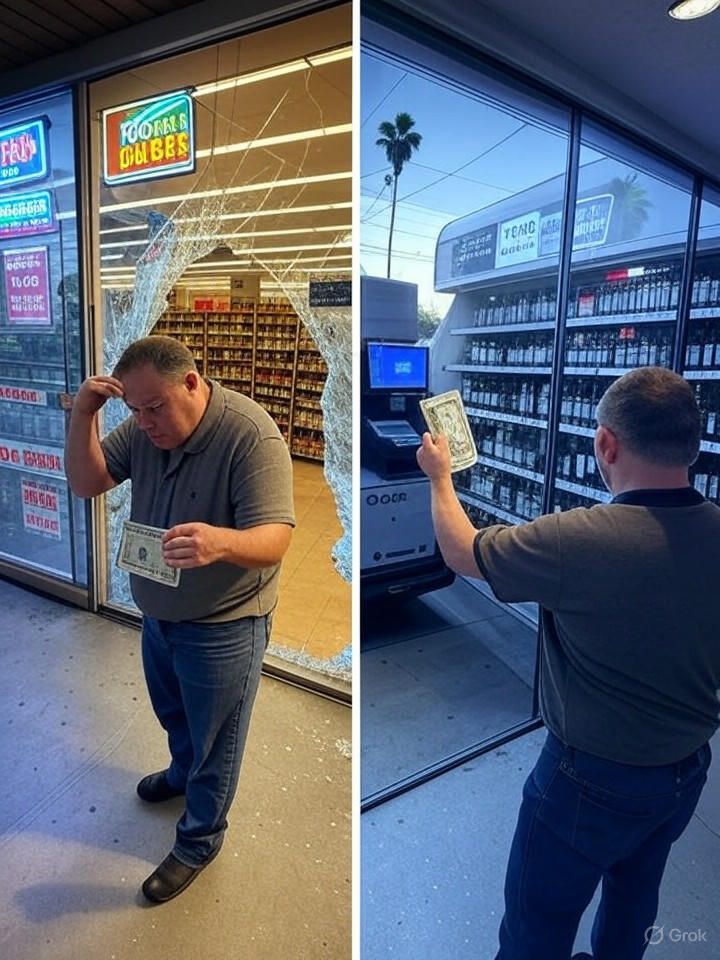
Standard glass coverage creates a financial trap that catches California liquor store owners off guard. Every broken window triggers your full deductible payment, regardless of damage amount or repair complexity.
Standard Glass Coverage Limitations: • Requires full deductible payment per incident • No protection against multiple claims in short periods • Limited emergency service coordination • Basic replacement coverage only • Possible coverage gaps for specialized glass types
Although glass insurance covers the costs of replacing your store windows and plate glass windows if they are damaged or destroyed by a covered loss, standard policies often exclude critical situations. Strict claim limits may also leave retailers vulnerable during peak incident periods.
Glass deductible buyback insurance completely transforms this cost structure. A buyback deductible is a deductible contained in the basic policy that may be removed by paying additional premium when full coverage is required. Out-of-pocket expenses drop dramatically to manageable amounts between $50 and $100 per incident.
Buyback Protection Benefits: • Deductibles reduced to $50-$100 maximum • Unlimited claim frequency protection • 24/7 emergency glass service coordination • Temporary boarding and security measures included • Coverage for storefront windows, entrance doors, and interior display cases • Faster claim processing for business continuity
Consider a typical scenario: A liquor store experiences three separate vandalism incidents within six months. Under standard coverage with a $1,000 deductible, the owner pays $3,000 out-of-pocket plus repair costs. Buyback coverage reducing deductibles to $100 would cost only $300 total for the same incidents.
The mathematics become compelling when factoring in California's high glass replacement costs and elevated incident rates in urban markets. Emergency services that standard coverage overlooks—including temporary window boarding, security monitoring, and expedited glass ordering—are included in buyback policies to minimize business interruption.
Evaluating your store's risk exposure against California's challenging retail environment makes this coverage difference crucial.
Real Numbers: When Buyback Premiums Beat Paying Deductibles
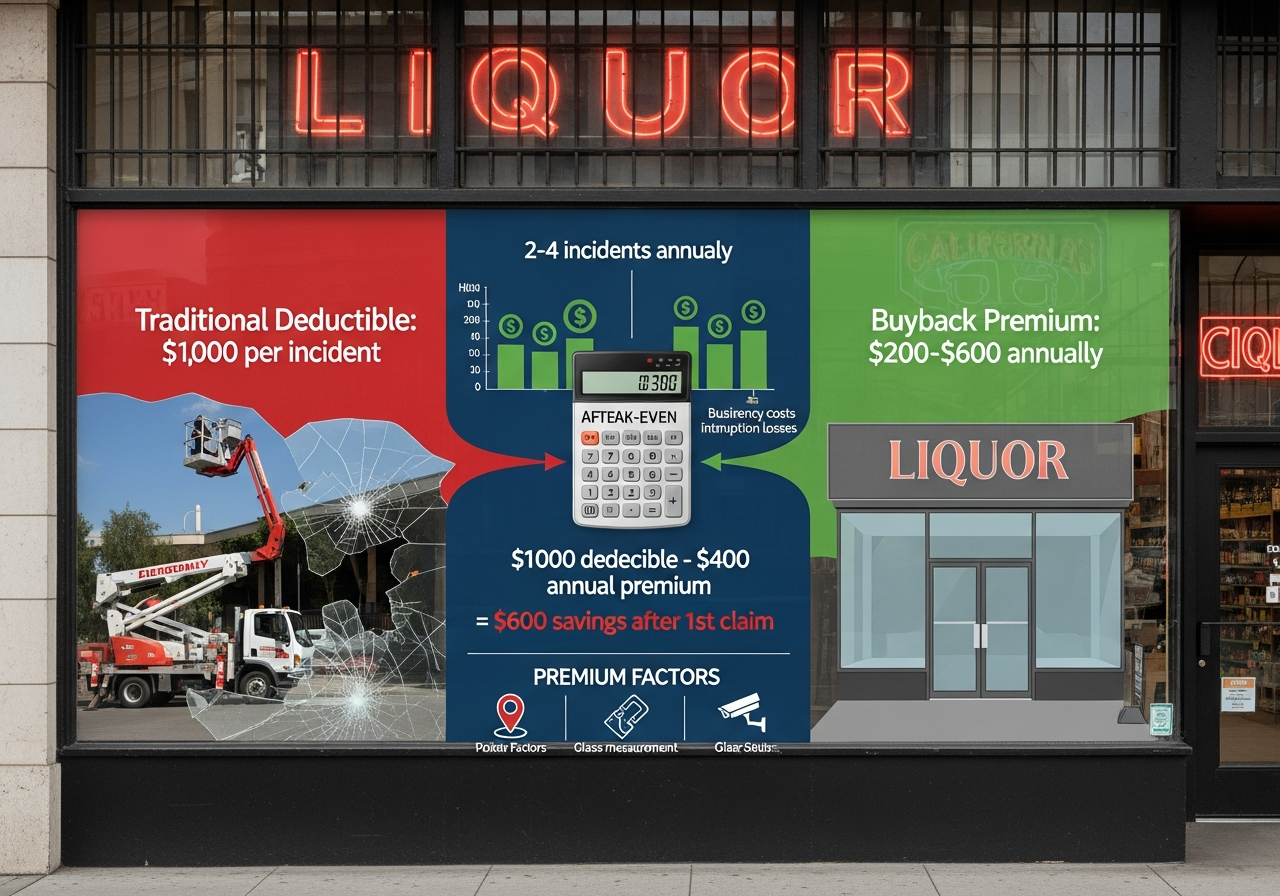
The financial mathematics of glass deductible buyback coverage reveal compelling economics for California liquor store owners. Annual buyback premiums typically range from $200 to $600, representing a fraction of standard glass deductibles that can reach $1,000 per incident.
Break-even analysis demonstrates that buyback coverage pays for itself after just one glass claim. A typical liquor store owner paying $400 annually for buyback coverage breaks even immediately when avoiding a single $1,000 deductible payment. High-risk locations—near schools, bars, or busy intersections—often experience 2-4 glass incidents annually, creating substantial savings opportunities.
Real-world results show impressive returns: stores experiencing two glass breaks yearly save $1,600 in deductible payments while paying only $400 in additional premiums. Net annual savings of $1,200 represent a 300% return on investment, not accounting for emergency service costs, business interruption losses, or the administrative burden of multiple deductible payments.
ROI Calculation Example:
- Annual buyback premium: $400
- Two glass incidents avoided deductibles: $2,000
- Emergency service coordination value: $300
- Business interruption savings: $500
- Total annual benefit: $2,800
- Net savings after premium: $2,400
Several factors directly influence premium costs. Location risk assessment considers crime statistics, foot traffic patterns, and proximity to potential hazard sources. Glass square footage directly affects premiums—larger storefronts with extensive window displays command higher rates. Security features like reinforced glass, security film, or comprehensive alarm systems can reduce premiums by 10-25%.
Between $500 and $1,200 per year represents the average cost of liquor store insurance in California for general liability coverage. Adding $200-$600 for glass deductible buyback represents a modest 17-50% increase in total premium costs while eliminating potentially devastating out-of-pocket expenses.
Understanding these financial dynamics enables informed coverage decisions that protect both immediate cash flow and long-term profitability.
California's Unique Glass Risks: Urban Crime and Seismic Activity
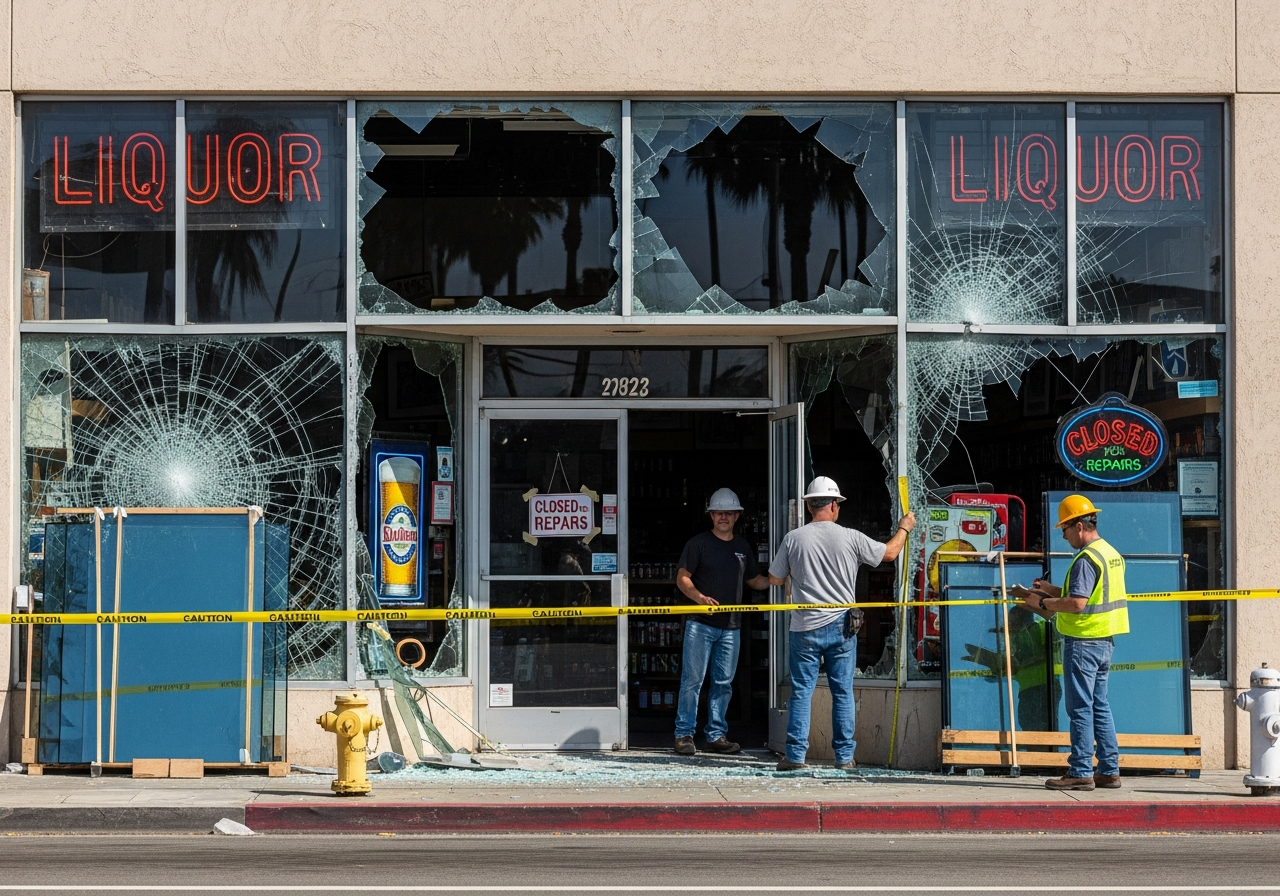
Glass damage strikes California liquor stores with alarming frequency. Urban areas across the state report 40% higher vandalism rates affecting storefronts compared to national averages, creating persistent exposure for retailers in Los Angeles, San Francisco, Oakland, and Sacramento markets.
Earthquake activity compounds these challenges through often-overlooked pathways. Even minor earthquakes create building vibrations that cause stress fractures in plate glass windows. Weakened structural integrity from tiny fractures makes windows vulnerable to complete failure from temperature changes or minor impacts weeks after the initial earthquake event.
California's high labor costs drive replacement expenses beyond material costs alone. Union glazier wages in major metropolitan areas often exceed $65 per hour, with emergency weekend service commanding premium rates. Glass insurance covers the costs of replacing your store windows and plate glass windows if they are damaged or destroyed by a covered loss, but coverage benefits face California's inflated repair market.
Additional financial obstacles arise from local building codes. Cities now require laminated safety glass or tempered glass installations for commercial storefronts, especially in areas with high pedestrian traffic. Upgraded materials cost substantially more than standard plate glass while providing enhanced security benefits.
Business interruption costs cascade from permit requirements. San Francisco requires building permits for storefront glass replacement exceeding certain dimensions, extending repair timelines from same-day service to week-long delays. Lost revenue during extended closure periods often exceeds actual glass replacement costs.
These California-specific factors transform routine glass damage into complex financial events that standard deductibles cannot adequately address, making specialized coverage solutions increasingly vital for sustainable operations.
Decision Matrix: Is Glass Deductible Buyback Right for Your Store
Smart liquor store owners should base buyback coverage decisions on systematic risk assessment rather than emotional reactions to broken windows. Five critical factors require analysis to determine whether annual buyback premiums deliver superior financial protection compared to absorbing deductible costs.
Location Risk Assessment Framework: • Crime statistics within 0.5-mile radius of your store • Daily foot traffic volume and pedestrian patterns • Street visibility and lighting conditions after business hours • Proximity to high-risk areas like bus stops, bars, or vacant properties • Historical vandalism patterns in your specific neighborhood
Claims History Analysis Review your glass damage incidents over the past three years. Stores experiencing two or more glass claims annually typically benefit from buyback coverage. Locations with minimal glass exposure may find standard deductibles more cost-effective.
Cash flow pressure creates the most compelling argument for buyback coverage. Between $500 and $1,200 per year represents the average cost of liquor store insurance in California for $1 million in general liability coverage. Unexpected $1,000+ glass deductibles can consume substantial portions of monthly insurance budgets, creating operational stress during already challenging periods.
Glass Exposure Calculation Measure your total storefront glass area in square feet and multiply by local replacement costs per square foot. Stores with extensive glass frontages face proportionally higher risk exposure and benefit more from comprehensive buyback protection.
> Alternative Strategy Consideration: Some retailers choose higher deductibles with lower premiums, then establish dedicated glass repair reserves. This approach works for stores with strong cash flow and minimal historical claims, but claim clustering leaves owners vulnerable.
Premium costs balanced against potential claim frequency determine the optimal decision. Consider your specific location risks and financial capacity to absorb unexpected repair expenses when making this evaluation.
Adding Buyback Coverage: Policy Integration and Implementation Steps
Your existing commercial property policy serves as the foundation for glass deductible buyback integration. California insurers offer buyback coverage through endorsement attachment rather than separate policy issuance, reducing administration and lowering premium costs compared to standalone glass policies.
Required Documentation for Application: • Current commercial property policy declarations page • Store photographs showing all glass surfaces and security features • Property address verification and square footage measurements • Business license and liquor license documentation • Loss history report for previous three years
A buyback deductible is a deductible contained in the basic policy that may be removed by paying additional premium when full coverage is required. Carriers eliminate standard glass deductibles by collecting additional premium upfront. Underwriter review and approval typically requires 5-10 business days for the endorsement process, with coverage activating immediately upon premium payment.
Pay careful attention to coverage limits and exclusions when coordinating with your existing commercial policy. Your agent must verify that glass buyback coverage aligns with property policy terms to avoid gaps that could void claims. For example, if your base policy excludes vandalism but includes it in glass coverage, claim disputes may arise during settlement.
Claims Reporting Procedures: • Contact your carrier's 24-hour claims hotline immediately after glass damage occurs • Document damage with photographs before temporary repairs • Obtain police reports for vandalism or break-in incidents • Coordinate with approved glass contractors for emergency boarding • Submit completed claim forms within 72 hours
Emergency contact information should remain accessible to all store personnel, including after-hours management staff who typically discover overnight damage. Between $500 and $1,200 per year represents the average cost of liquor store insurance in California for $1 million in general liability coverage, demonstrating that comprehensive coverage integration protects your investment without dramatically increasing annual insurance costs.
Beyond Glass: Complete Storefront Protection Strategy
Effective storefront protection requires layered security measures extending beyond glass replacement coverage. Modern security system integration delivers measurable insurance discounts and reduces break-in attempts that commonly result in glass damage. California liquor store owners who install monitored alarm systems, motion detectors, and surveillance cameras typically receive 10-15% premium reductions on their commercial property policies.
Preventive Measures That Reduce Glass Damage Risk: • Install security film on storefront windows to prevent shattering • Maintain adequate exterior lighting with motion sensors • Position valuable merchandise away from window displays • Implement reinforced door frames and commercial-grade locks • Schedule regular glass inspection for stress cracks and wear patterns
Business interruption coverage provides critical protection during extended glass repairs, especially when custom or specialty glass requires weeks for replacement. This coverage addresses lost revenue and continuing expenses while your store remains closed or operates with reduced capacity.
Inventory protection during glass replacement prevents theft and weather damage to exposed merchandise. Temporary boarding services and enhanced security monitoring protect your investment until permanent repairs restore full storefront integrity.
> Rising Premium Alert: Commercial property insurance premium increases are predicted to be 5% to 25% in 2024, making comprehensive protection strategies more valuable than reactive claim management approaches.
Long-term property value preservation requires proactive maintenance schedules and strategic coverage selection. California's competitive retail environment demands storefronts that project security and professionalism, making comprehensive glass protection an investment in customer confidence and business continuity.
About Gillkor Insurance Team
Expert commercial insurance guidance from the Gillkor Insurance team. Specializing in California business insurance solutions.
Stay Informed About Insurance Updates
Get the latest insurance insights and tips delivered to your inbox
Subscribe to Updates